
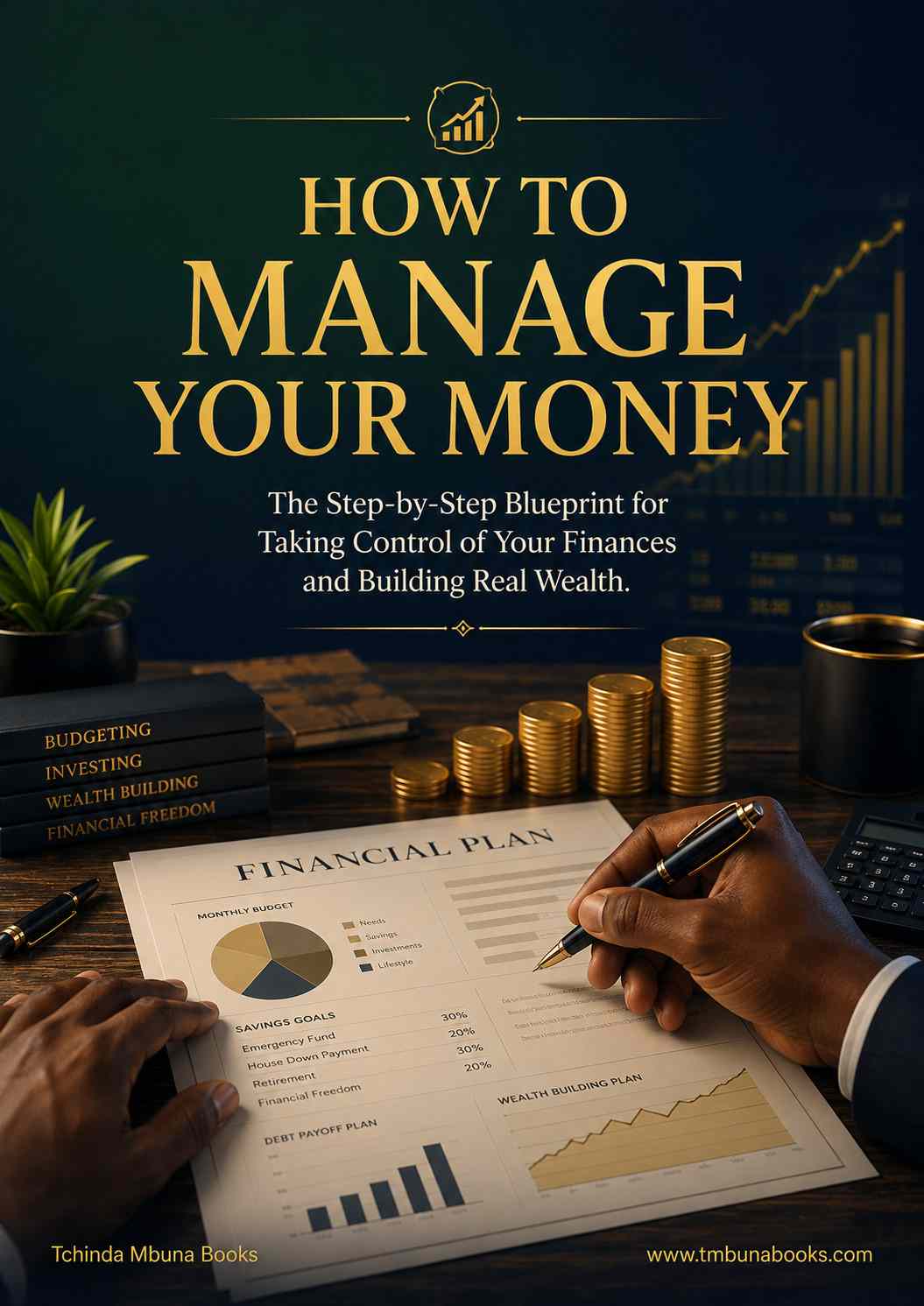
Nobody taught you this. That ends here.
Most people are not bad with money. They were simply never shown a system. This book gives you that system, starting with how to reduce monthly expenses and building all the way to real, durable wealth.
Is This You?
- Money leaves your account faster than you can explain and you are not sure where it goes
- You earn reasonably well and still feel like you are barely holding on
- You have searched how to reduce monthly expenses and found lists about cancelling streaming services
- Every finance article assumes knowledge nobody ever actually taught you
- You avoid looking at your accounts because looking makes it real
- You want a plan, in order, rather than forty disconnected tips
Why Money Advice Usually Fails
Search how to reduce monthly expenses and you will mostly find lists rather than systems.
Most financial advice starts in the middle. It talks about investing before you have a budget, or index funds before you have an emergency fund. It assumes a foundation that most people were never given.
It also tends to be moralising. Skip the coffee. Stop being frivolous. That framing misses the point entirely, because knowing how to reduce monthly expenses is a skill, not a virtue, and treating it as a character issue keeps people stuck and ashamed.
What This Book Gives You
This book treats how to reduce monthly expenses as the first step in a full system rather than a standalone trick.
A complete system, in sequence, starting from the absolute basics. Money mindset first, then tracking, then budgeting, then killing debt, then the emergency fund, then saving, then your first investments. Each stage builds on the one before, which is why the order matters.
Zero financial jargon. Real numbers you can follow. Every chapter tells you exactly what to do next rather than leaving you with a principle and no instruction.
What You Will Learn
- How to reduce monthly expenses without making your life miserable or unsustainable
- How to save on bills across the categories where the real money actually sits
- How to track spending honestly, which is uncomfortable and completely necessary
- How to build a budget that survives contact with an ordinary imperfect month
- Why is budgeting important even when your income feels too small to bother, and what changes when you start
- The order to kill debt in, and why the mathematically optimal order is not always right
- How much emergency fund you actually need, based on your circumstances not a generic rule
- Ways to save money that compound rather than requiring constant willpower
- How to raise your income alongside cutting costs, because cutting alone has a floor
- What to do with money once the basics are covered, explained without jargon
- How to reduce monthly expenses permanently rather than for one determined month
- Planning and budgeting for irregular income, seasonal work and unpredictable months
- Money management habits that hold when life gets busy and attention slips
- How to talk about money with a partner without it becoming a fight
How to Use This Book
Do not read it passively. Keep a notebook or your banking app open beside you, because several chapters ask you to look at your actual numbers. That moment is uncomfortable for almost everyone, and it is also the exact moment things start changing.
Nobody has ever improved their finances by avoiding the numbers. Learning how to reduce monthly expenses starts with knowing precisely what those expenses are, which most people genuinely do not.
Free tools from the Consumer Financial Protection Bureau and Investor.gov complement the methods here. This book is educational rather than personalised financial advice. For decisions involving significant sums, tax implications or investments, please consult a qualified financial professional.
Who This Book Is For
People arrive at the question of how to reduce monthly expenses from very different starting points, and this book assumes none of them.
Anyone who was never taught this, which is most people. Whether you are twenty two and starting out or fifty and starting over, the sequence is the same. You do not need existing savings, a high income or any prior knowledge.
What Makes This Different
Plenty of books explain how to reduce monthly expenses. Very few then tell you what to do with what you free up.
It refuses to skip the beginning. Most finance books assume you already track your spending and have a budget, then move straight to investing. If those foundations are missing, everything built on top of them falls over.
It is also not moralistic. There is no lecture about lattes. Knowing how to reduce monthly expenses is presented as a mechanical skill you can learn, not evidence of superior discipline.
Whether you want to reduce monthly expenses, escape the paycheck to paycheck cycle, or build genuine wealth over decades, it starts the same way: with a clear picture of where you actually are.
Continue Your Reading
If debt is the immediate problem, Debt-Free by Design is the faster starting point. If you want the budgeting chapters in far greater depth, Budgeting for Beginners covers exactly that. And once the foundations hold, Money Habits of the Quietly Wealthy shows what people who build real wealth do differently. Browse the full Personal Finance collection.
About Tchinda Mbuna Books
Tchinda Mbuna Books is dedicated to publishing practical, high-quality guides that respect your intelligence and deliver real results. Every book we publish is built around one promise: information you can act on the same day you read it.
How You Get Your Book
Your complete guide on how to reduce monthly expenses and manage your money arrives instantly. After purchase you will receive an email from BookFunnel with access to your book. Read it online in your browser or in the free BookFunnel app on iOS, Android or desktop. Your copy is personally watermarked to you.
Reviews
There are no reviews yet.