

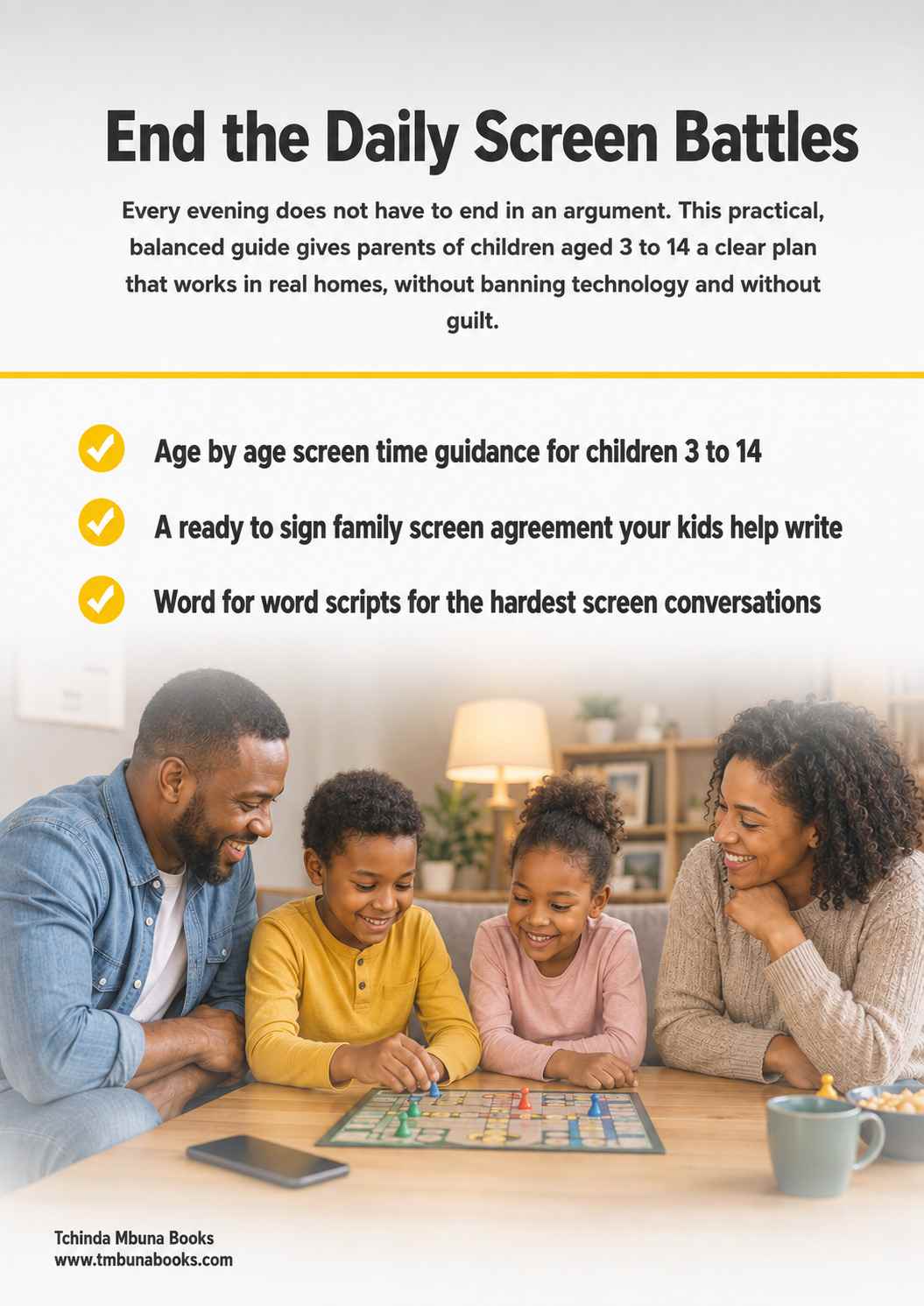
Screens are not the enemy. Unmanaged screens are.
Setting screen time rules for kids does not have to mean a daily argument. Most families are fighting because the rules were imposed rather than built, and nobody agreed what they were for in the first place.
Is This You?
- Every handover of a device ends in negotiation, tears or both
- You have set screen time rules for kids before and quietly stopped enforcing them
- You genuinely do not know how much is too much at your child’s age
- Half the advice you read says screens are poison and the other half says relax
- Homework, sleep and screens are tangled together and you cannot separate them
- You feel hypocritical setting limits while holding your own phone
Why the Daily Battle Happens
There is one structural reason screen time rules for kids collapse, and it has nothing to do with willpower.
Because the child had no part in making the rule. A limit handed down from above invites testing. A limit a child helped design gets defended by that child, which changes the entire dynamic.
The other reason is that most screen time rules for kids treat all screen use identically. An hour of video calls with a grandparent is not an hour of autoplay, and rules that ignore the difference feel arbitrary because they are.
What This Book Gives You
This book builds screen time rules for kids from evidence rather than from anxiety.
Sixteen chapters covering ages three to fourteen, starting with what the research actually says rather than what headlines claim. The Four Types of Screen Time framework is the foundation: once you can categorise use, sensible limits follow naturally.
You also get scripts for the hard conversations, a plan for transitions and meltdowns when time is up, screen free activities that genuinely compete, and the sleep, homework and evening routine chapter.
What You Will Learn
- How to set screen time rules for kids that survive past the second week
- What the research actually says, separated from alarmist headlines
- The Four Types of Screen Time, and why treating them identically causes fights
- How much screen time for 3 year olds, and how limits should shift as they grow
- Age appropriate screen time limits across the full three to fourteen range
- Scripts for the hard conversations, including the ones about other children’s rules
- Handling transitions, meltdowns and follow through when time runs out
- Screen free activities that actually compete rather than being obviously worse
- Sleep, homework and the evening routine, which is where most conflict concentrates
- Safety, privacy and digital citizenship as children get older
- Passwords and account access, handled without surveillance
- How much screen time is too much, answered by type of use rather than by clock alone
- What the parents promise, because rules that apply only to children never hold
- When screens are the symptom rather than the problem itself
- Whether screen addiction among teens is a real phenomenon or a loaded label
How to Use This Book
Build the Family Screen Agreement together rather than presenting it finished. Rules children help write are dramatically easier to enforce than rules handed down, and that shared process is half of why the agreement works.
The agreement has fifteen clauses covering daily limits, weekends, bedrooms, sleep, what happens if it is broken, how time can be earned back, and what the parents commit to. Chapter 15 exists because screen time rules for kids that exempt the adults collapse quickly.
Then run the 30 Day Family Reset. Gradual rather than sudden, because an overnight crackdown produces resistance rather than change.
Guidance on children and screen use from the American Academy of Pediatrics and the World Health Organization covers the current recommendations by age.
This book offers general parenting guidance based on widely accepted child development principles and publicly available research. It is not a substitute for medical, psychological or educational advice from a qualified professional who knows your child. If you have concerns about your child’s development, mental health, sleep, learning or behaviour, please speak to your doctor, paediatrician or a licensed mental health professional.
Who This Book Is For
Almost every parent has attempted screen time rules for kids at least once and watched them dissolve.
Parents of children roughly three to fourteen who want a position rather than a panic. If you have been looking for screen time rules for kids that are neither permissive nor alarmist, this occupies that middle ground deliberately.
What Makes This Different
Most books on screen time rules for kids pick a side and argue it. This one refuses.
It is not alarmist. Plenty of books treat screens as uniformly harmful, which parents recognise as untrue and therefore discount entirely. This one distinguishes between types of use and builds rules on that distinction.
It also binds the parents. The agreement includes what adults commit to, because children notice hypocrisy immediately and screen time rules for kids that exempt the rule-setter lose authority fast.
And it addresses the underlying question. Chapter 16 covers when screens are the symptom of something else entirely, which is the chapter most parents did not know they needed.
Continue Your Reading
If the meltdowns when time runs out are the hardest part, The Calm Parent gives you tools for that exact moment. For younger children, Parenting Tips for Toddlers covers ages one to five. And if comparison on social media is affecting your child, Raising Confident Kids has a full chapter on the digital mirror. Browse the full Parenting collection.
About Tchinda Mbuna Books
Tchinda Mbuna Books is dedicated to publishing practical, high-quality guides that respect your intelligence and deliver real results. Every book we publish is built around one promise: information you can act on the same day you read it.
How You Get Your Book
Your complete guide to screen time rules for kids arrives instantly. After purchase you will receive an email from BookFunnel with access to your book. Read it online in your browser or in the free BookFunnel app on iOS, Android or desktop. Your copy is personally watermarked to you.




Reviews
There are no reviews yet.