
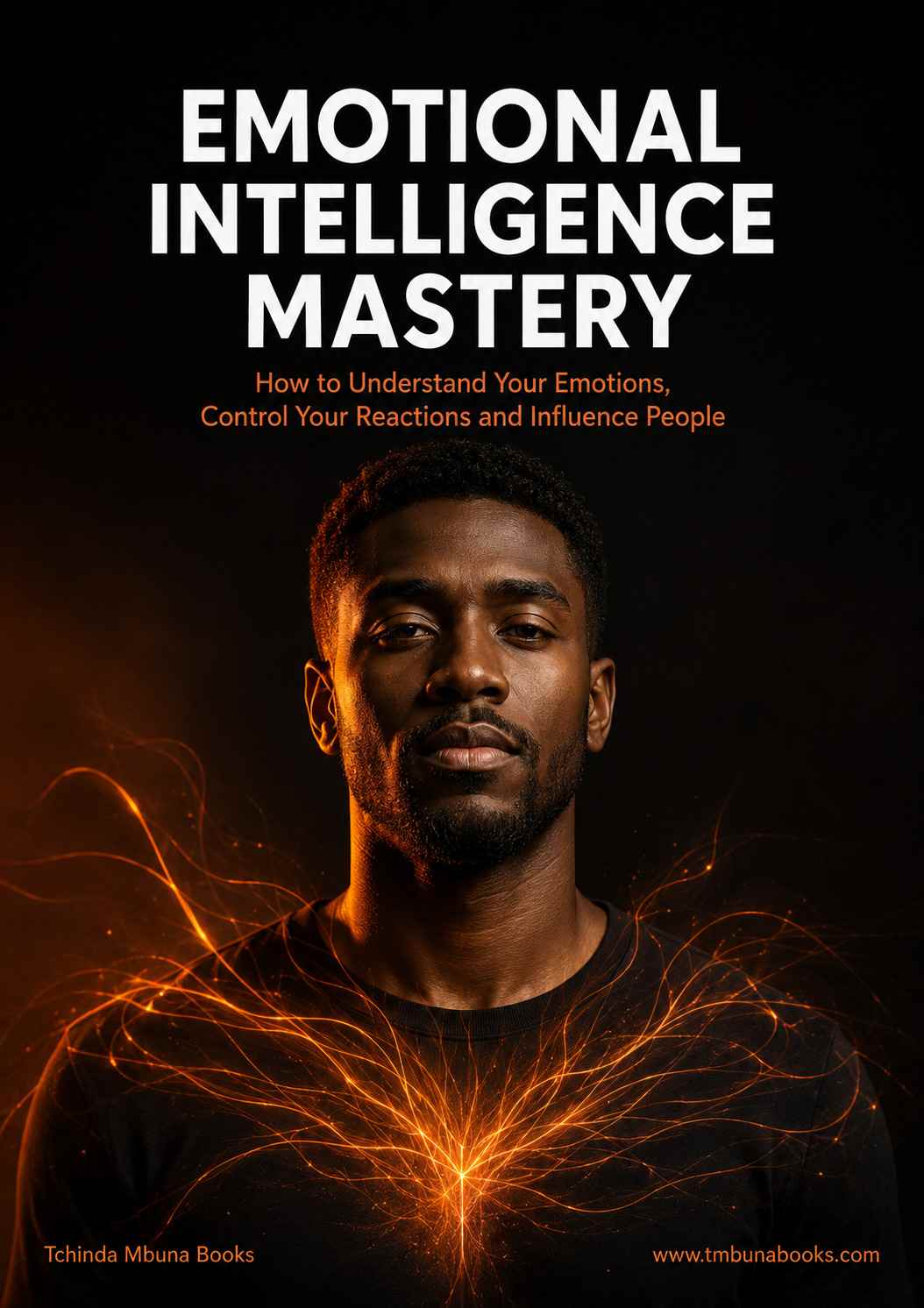
Intelligence gets you the job. Emotional intelligence gets you everything after.
Learning how to improve emotional intelligence is not about becoming calmer or nicer. It is about the six seconds between a trigger and your response, and what you do with them.
Is This You?
- You say the thing in the heat of the moment and spend the evening regretting it
- You know you were triggered but only after the conversation has already gone wrong
- You read people well socially and badly at work, or the other way round
- You have searched how to improve emotional intelligence and found academic theory
- Someone less capable than you keeps getting the opportunities
- You go quiet when flooded, then think of the right words two hours later
The Skill That Runs Everything
Nobody is taught how to improve emotional intelligence at school, which is odd given how much depends on it.
Most of what determines how a career or a relationship goes is not technical ability. It is what happens in the moments when emotion arrives faster than thought, and whether you can put a gap between the two.
That gap is roughly six seconds. It is the window where escalation either happens or does not. Knowing how to improve emotional intelligence is largely a matter of learning to notice that window and use it, which is trainable in a way most people are never told.
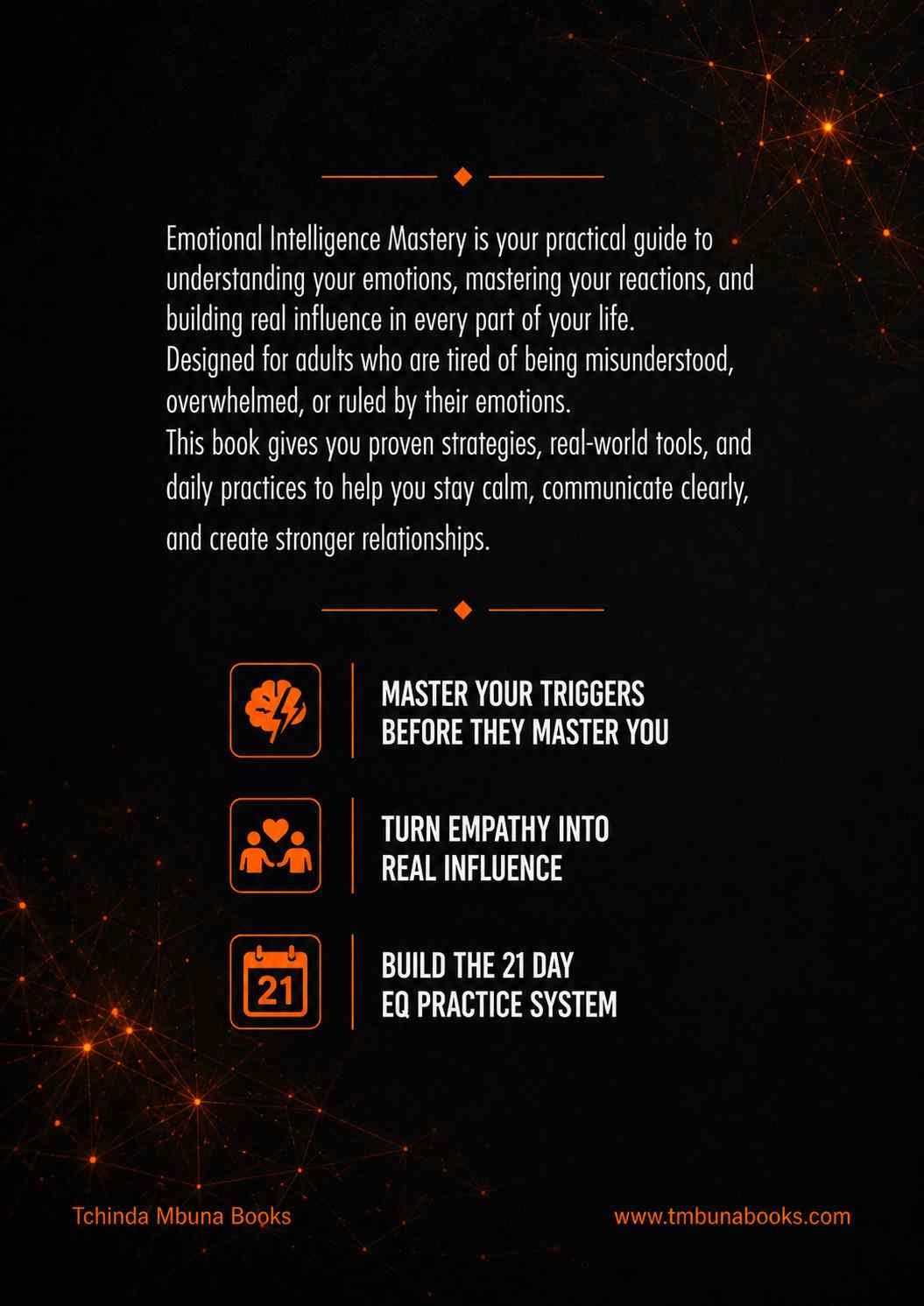
What This Book Gives You
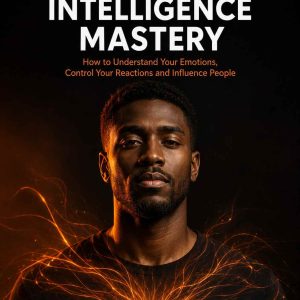
Most books on emotional intelligence explain the theory. This one is built around how to improve emotional intelligence in practice.
The five pillars framework, taught through real workplace and relationship scenarios rather than academic theory: self-awareness, self-regulation, motivation, empathy and social skill.
Each pillar gets its own chapter with practical tools. There is a self-assessment to find your starting point, a trigger identification table to map your specific patterns, and a worked one week example showing all five pillars operating across ordinary days.
What You Will Learn
- How to improve emotional intelligence across all five pillars rather than one at a time
- What EQ actually is, and how it differs from IQ in day to day impact
- Self-awareness in practice: naming what you feel while you are feeling it
- The six seconds that decide whether a situation escalates or resolves
- How to map your personal emotional triggers using the identification table
- How to improve emotional intelligence when you are the calmest person in a room full of reactive ones
- Self-regulation techniques that work under real pressure rather than in theory
- How motivation functions as an EQ pillar rather than as a mood
- Empathy as a skill you can practise, including with people you find difficult
- Social skill and influence without manipulation, which is the line most books blur
- The 21 Day EQ Practice System, one focused practice per day
- What emotional self awareness looks like when it is genuinely working
- Signs of emotional intelligence in others, and what low EQ reliably looks like
- What is emotional intelligence in a relationship, as opposed to at work
- What happens when EQ breaks down under burnout, and how to recover without shame
- Emotional intelligence examples worked through across a full week
How to Use This Book
Work through one pillar at a time and pay attention to your real interactions between chapters. Emotional intelligence cannot be absorbed in a single reading because the practice happens outside the book.
Knowing how to improve emotional intelligence starts with knowing where you actually stand. Start with the self-assessment so you know which pillar is weakest. Most people are strong in two or three and genuinely poor in one, and progress comes fastest from addressing the weak one rather than polishing the strong ones.
Then run the 21 Day EQ Practice System and use the Daily EQ Journal, which is thirty prompts designed to take under five minutes each. The 90 day roadmap at the end turns all of it into a longer plan.
Research on emotional regulation and interpersonal skill from the American Psychological Association and HelpGuide covers the underlying evidence. This book is educational rather than therapy. If emotional regulation is significantly affecting your work or relationships, please speak with a qualified professional.
Who This Book Is For
Anyone wondering how to improve emotional intelligence is usually already aware that something keeps going wrong in the same way.
Professionals, managers, partners and parents. Anyone whose results depend on other people, which is nearly everyone. The book also answers directly whether introverts are at a disadvantage, and the answer is no.
What Makes This Different
It teaches through scenarios. Most books on how to improve emotional intelligence explain the model and leave application to you, which is precisely the part people struggle with.
It also draws a firm line between influence and manipulation. Social skill is taught as reading a room accurately and responding well, not as extracting outcomes from people, and the book is explicit about where that line sits.
And it covers breakdown honestly. There is a full chapter on what happens when EQ fails under burnout or emotional flooding, because a book on how to improve emotional intelligence that assumes you will always be at your best is not describing real life.
Continue Your Reading
If the difficult conversations themselves are what you dread, The Communication Blueprint supplies exact scripts. If self-doubt is undermining how you show up, The Confidence Code addresses that foundation. And if stating your limits is the weak point, The Art of Setting Boundaries gives you the wording. Browse the full Self-Help and Mindset collection.
About Tchinda Mbuna Books
Tchinda Mbuna Books is dedicated to publishing practical, high-quality guides that respect your intelligence and deliver real results. Every book we publish is built around one promise: information you can act on the same day you read it.
How You Get Your Book
Your complete guide on how to improve emotional intelligence arrives instantly. After purchase you will receive an email from BookFunnel with access to your book. Read it online in your browser or in the free BookFunnel app on iOS, Android or desktop. Your copy is personally watermarked to you.
Reviews
There are no reviews yet.