
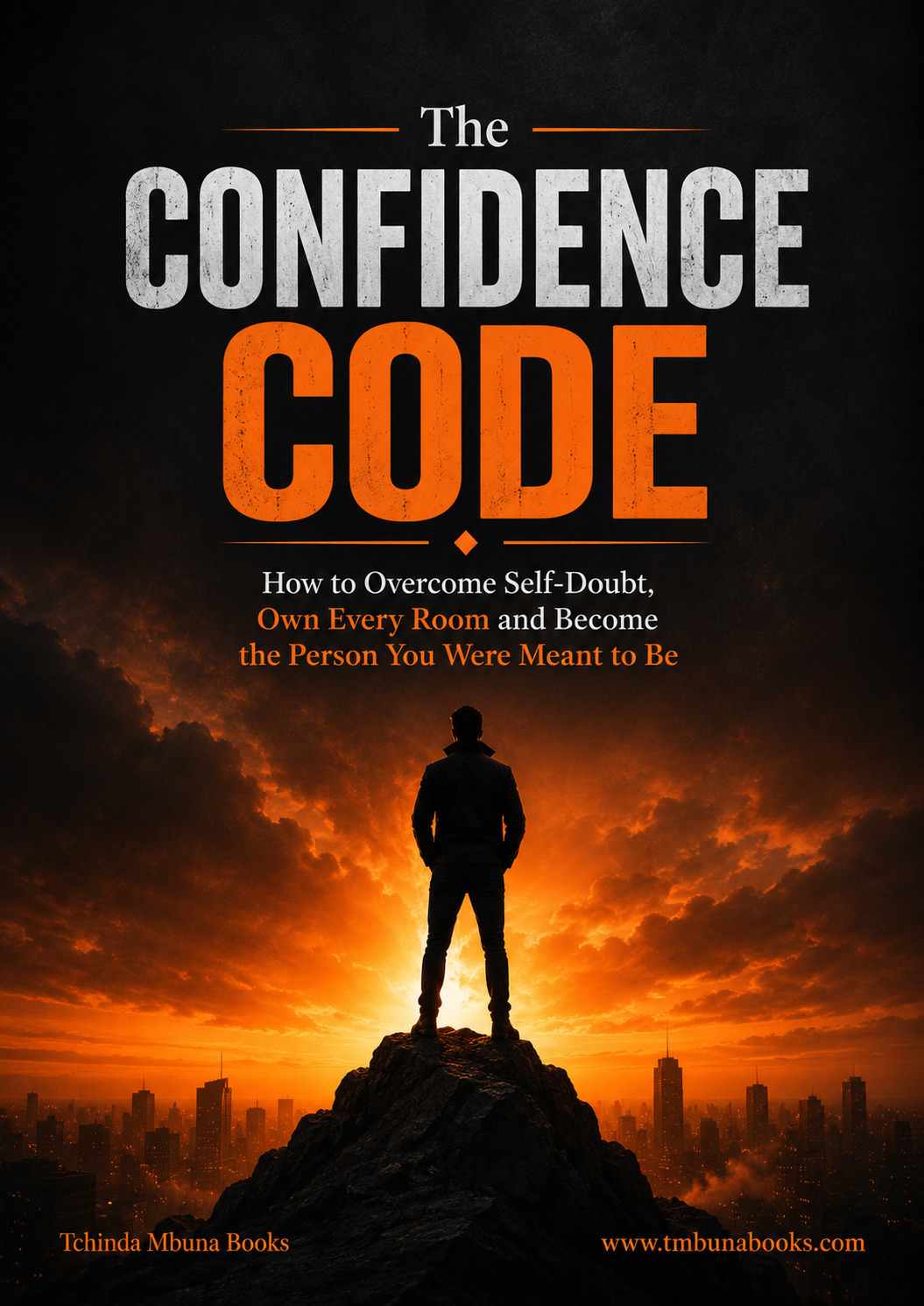

Confidence is not a personality trait. It is a skill nobody taught you.
Most advice on how to overcome self doubt tells you to fake it until you make it. That builds a performance, not a foundation, and performances collapse under pressure. This book builds the real thing instead, from evidence rather than affirmations.
Is This You?
- You have achieved real things and still feel like you got away with something
- You rehearse a comment three times and the moment passes before you say it
- Other people seem to belong in rooms where you feel like a visitor
- You have looked up how to overcome self doubt and found lists of affirmations
- One piece of criticism outweighs ten pieces of praise, every time
- You compare your ordinary days to other people’s highlights and lose
The Confidence Lie
Most guidance on how to overcome self doubt starts in the wrong place entirely.
There is a difference between performing confidence and possessing it. The performance is loud, certain and exhausting to maintain. The real version is quieter, survives being wrong, and does not require anyone else to validate it.
Affirmations fail because your brain does not accept unsupported claims from a source it already distrusts. Learning how to overcome self doubt works the other way around: you gather evidence first, and belief follows the evidence rather than preceding it.
What This Book Gives You
This book approaches how to overcome self doubt as a construction project with an order of operations.
It starts with the foundation: what confidence actually is, where the self-worth gap comes from, and the four roots of self-doubt, which are comparison, criticism, perfectionism and past rejection.
Then it builds the inner case using the Evidence Log Method, rewrites your inner voice from critic to coach, and dismantles imposter syndrome by naming its five distinct patterns rather than treating it as one vague feeling.
What You Will Learn
- How to overcome self doubt using documented evidence rather than positive thinking
- What is confidence when stripped of the performance, and why it is trainable rather than innate
- Where the self-worth gap comes from and how it quietly widens over years
- The four roots of self-doubt: comparison, criticism, perfectionism and past rejection
- The Evidence Log Method, which is the central tool of the entire book
- How to rewrite your inner voice from critic into coach
- How to overcome impostor syndrome by identifying which of the five patterns is yours
- Body language that builds belief: posture, eye contact, gesture and pace
- The voice of someone who belongs, including pace, volume and the pause
- How to stop comparing yourself to others when comparison is engineered into your feed
- Owning the room socially, from entering to conversation to leaving well
- Owning the room professionally, in meetings, presentations and negotiations
- How to overcome self doubt under pressure, when you are being judged in real time
- How to read body language accurately, including what it does not reliably tell you
- How low self esteem and self-doubt feed each other, and where the loop can be cut
How to Use This Book
Start the Evidence Log immediately, before you finish the book. Confidence grows from evidence, and the log is where that evidence accumulates into something your own brain will accept.
Then work through the 21-Day Confidence Building Challenge. It is built from small acts of courage repeated often, because learning how to overcome self doubt happens through action rather than through insight alone.
Do not skip the uncomfortable days. Those are the ones doing the work, and skipping them is the most common way readers finish the challenge without changing anything.
Guidance on self-esteem and confidence from the NHS and the American Psychological Association covers the underlying research. This book is educational rather than therapy. If low self-worth or anxiety is significantly affecting your daily life, please speak with a qualified professional.
Who This Book Is For
The people searching how to overcome self doubt are almost never the least competent people in the room.
Capable people who do not feel capable. Anyone whose internal experience does not match their external record. If you want to know how to overcome self doubt without pretending to be someone you are not, this was written for you.
What Makes This Different
It rejects affirmations outright. Most books on how to overcome self doubt ask you to repeat statements you do not believe, which reliably produces resistance rather than confidence.
It also separates the internal and external work properly. Part Two builds what you believe about yourself, Part Three covers how you carry yourself, and they are addressed in that order because body language without foundation is just a better performance.
And it is specific about imposter syndrome. Naming which of the five patterns you run changes the response, whereas treating it as one undifferentiated feeling leaves you with nothing actionable.
Continue Your Reading
If self-doubt shows up as mental circling, Stop Overthinking Start Living breaks that loop. If you struggle to state needs out loud, The Art of Setting Boundaries gives you the wording. And if reading people accurately is part of what you want, Emotional Intelligence Mastery goes deeper. Browse the full Self-Help and Mindset collection.
About Tchinda Mbuna Books
Tchinda Mbuna Books is dedicated to publishing practical, high-quality guides that respect your intelligence and deliver real results. Every book we publish is built around one promise: information you can act on the same day you read it.
How You Get Your Book
Your complete guide on how to overcome self doubt arrives instantly. After purchase you will receive an email from BookFunnel with access to your book. Read it online in your browser or in the free BookFunnel app on iOS, Android or desktop. Your copy is personally watermarked to you.


Reviews
There are no reviews yet.